

Washing Feet and the Order of the Kingdom (John 13:1-17)
2 The evening meal was in progress, and the devil had already prompted Judas, the son of Simon Iscariot, to betray Jesus. 3 Jesus knew that the Father had put all things under his power, and that he had come from God and was returning to God; 4 so he got up from the meal, took off his outer clothing, and wrapped a towel around his waist. 5 After that, he poured water into a basin and began to wash his disciples’ feet, drying them with the towel that was wrapped around him. 6 He came to Simon Peter, who said to him, “Lord, are you going to wash my feet?”
7 Jesus replied, “You do not realize now what I am doing, but later you will understand.” (Jn 13:2–7).

Lifted up (John 12:20-34)
20 Now there were some Greeks among those who went up to worship at the festival. 21 They came to Philip, who was from Bethsaida in Galilee, with a request. “Sir,” they said, “we would like to see Jesus.” 22 Philip went to tell Andrew; Andrew and Philip in turn told Jesus.
23 Jesus replied, “The hour has come for the Son of Man to be glorified. (Jn 12:20–23).

Dueling Parades(John 12:12-19)
The triumphal entry reveals Jesus as a king who confronts empire not with intimidation and violence, but with humility, joy, and liberating love—breaking the endless cycle of Babylon and inviting us into God’s upside-down kingdom.


Love Over Fear (John 11:47–53)
The chief priests and the Pharisees called a meeting of the Sanhedrin.
“What are we accomplishing?” they asked. “Here is this man performing many signs. 48 If we let him go on like this, everyone will believe in him, and then the Romans will come and take away both our temple and our nation.”
49 Then one of them, named Caiaphas, who was high priest that year, spoke up, “You know nothing at all! 50 You do not realize that it is better for you that one man die for the people than that the whole nation perish.”
51 He did not say this on his own, but as high priest that year he prophesied that Jesus would die for the Jewish nation, 52 and not only for that nation but also for the scattered children of God, to bring them together and make them one. 53 So from that day on they plotted to take his life. (Jn 11:47–53)

Trampling Upon the Sea / John 6:16-24
In the ancient world, the sea was a symbol of evil, chaos, and darkness. For the Hebrew people, it was the abyss—a place of monsters and a symbol of everything beyond human control. We see this imagery throughout scripture. Job speaks of God who “treads on the waves of the sea” (Job 9:8), demonstrating divine authority over this chaos.

The Divine Son Discourse / John 5:19-47
… the theological spotlight hits Jesus, and He speaks directly to the reader—us—not just to the Pharisees.
John 5:1-18 / Law VS Love
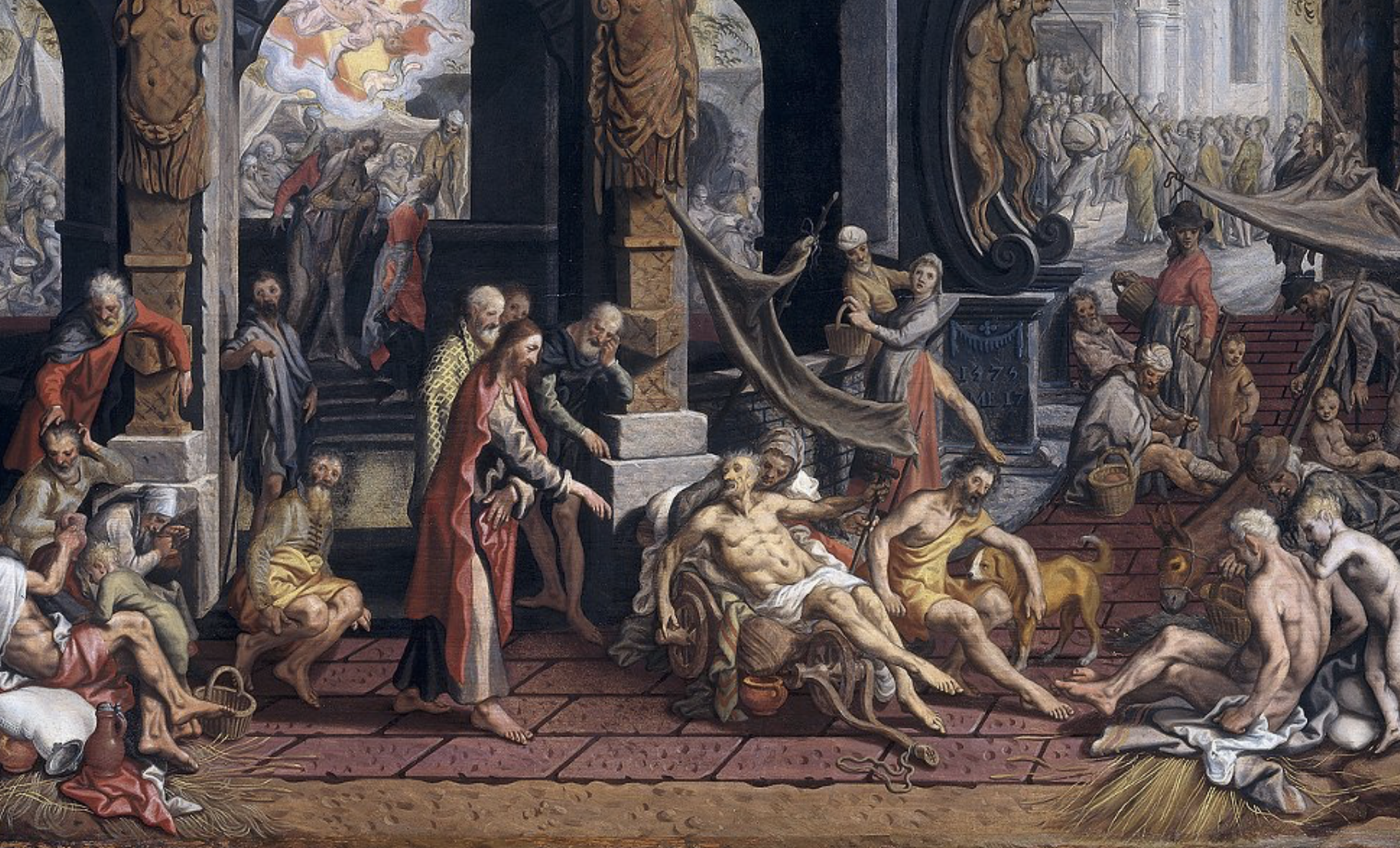
When Jesus saw him lying there and learned that he had been in this condition for a long time, he asked him, “Do you want to get well?”
7 “Sir,” the invalid replied, “I have no one to help me into the pool when the water is stirred. While I am trying to get in, someone else goes down ahead of me.” (Jn 5:6–7).

John 4:27-42 / Ripe Fields
In the end, many Samaritans believe—not just because of the woman’s words, but because they meet Jesus themselves. And through that encounter, they declare: “This man really is the Savior of the world.” (John 4:42)


John 3:22-36 / He Must Increase
John 3:22-36 begins with a moment of tension between John the Baptist’s disciples and Jesus, who had begun baptizing people in the region nearby. John’s disciples come to him, worried. Crowds were gathering around Jesus. People were going to him to get baptized instead of John. Their influence was shrinking. Their visibility was fading.
John 3:16-21 / Only Begotten Son
What’s really at stake in John 3:16? It cannot simply be about our accommodations for the afterlife, but about the kind of people we’re becoming. The kind of world we’re creating. The kind of love we embody.

John 3:1-15 / Darkness & Light
The story of Nicodemus in John 3 is more than just a late-night conversation. It’s a challenge—a call to see the world through the eyes of Christ rather than the lens of power, status, or religious tradition.


John 2:13-25 / Exorcising The Busy Temple
13 When it was almost time for the Jewish Passover, Jesus went up to Jerusalem. 14 In the temple courts he found people selling cattle, sheep and doves, and others sitting at tables exchanging money. 15 So he made a whip out of cords, and drove all from the temple courts, both sheep and cattle; he scattered the coins of the money changers and overturned their tables. 16 To those who sold doves he said, “Get these out of here! Stop turning my Father’s house into a market!” (Jn 2:13–16).


John 1:1-5 / Centering Jesus
John’s Gospel is an invitation—not to a rigid system, but to a faith always moving toward Jesus.